

Academics
Contemplative wisdom,
compassionate action, and modern science
Preparing you to thrive in a world that has mastered the accumulation of knowledge but not the wisdom to apply it.
Two tracks. One foundation.
Kremsegg University is organized around two academic tracks — Applied Contemplative Practices and Coherent Leadership — each offered at both undergraduate (BA) and graduate (MA) level.
That foundation is taught the way the great contemplative universities once taught — rigorous study and embodied practice held together. Students engage not only through scholarship but through practice.
Applied contemplative practices
This track is steeped in the insights and methods of Buddhist and cross-traditional contemplative inquiry. Students explore how attention, emotion, and cognition can be cultivated in ways that support both personal well-being and social transformation. In the spirit of the ancient monastery of Nalanda — where Buddhist philosophy was studied alongside other traditions — students engage the world’s wisdom traditions as a comparative inquiry into the human capacity for wisdom and compassion.
Drawing on contemporary scientific research alongside centuries of contemplative philosophy, the program is grounded in the scholar-practitioner model: students and faculty do not only study these traditions, they engage them from the standpoint of lived practice.
Where it leads. Graduates are equipped to design evidence-based contemplative programs, to teach resilience and ethical practice, to conduct interdisciplinary inquiry, and to carry the tools of contemplative practice into education, healthcare, social innovation, and community life.
Coherent leadership
Rooted in the same contemplative foundation as its companion track, this program prepares leaders to navigate complexity with wisdom and compassion. Students learn to lead from a clear-eyed sense of the future that wants to emerge — attending to the inner source from which all action originates.
They learn to think systemically: to see how culture, economics, and ecology interact across scales, grounded in the recognition that interdependence is not an abstract idea but the actual structure of the world they are leading in. And they develop the capacity to recognize the difference between who someone is today and who they are becoming, and to lead from that deeper recognition.
Leadership here is treated as the capacity to align intention, action, and long-term consequence — what the university calls coherence.
Where it leads. Graduates design and lead organizations that measure success not by profit alone, but by their contribution to systemic prosperity; a condition in which economic vitality, social well-being, and the health of the planet reinforce rather than undermine one another.

Executive & professional programs
The people who most urgently need to encounter contemplative wisdom are often those least able to step away for a residential degree: senior leaders in business, government, and civil society who carry institutional weight and cannot disappear from their responsibilities for years at a time.
For them, executive and professional programs are a structural part of the university’s design. Short residential intensives, hybrid professional programs, and leadership immersions at Kremsegg Castle bring established leaders into direct contact with the university’s intellectual and contemplative resources. The hybrid format, with periods of residential immersion combined with sustained engagement at a distance, fits the lives of people with serious responsibilities in a way that traditional degree programs cannot.
Summer intensives
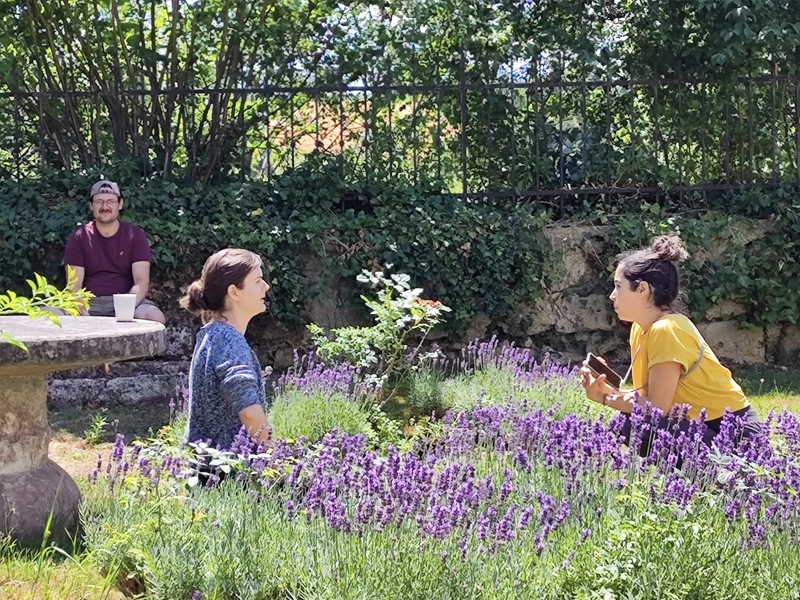
Summer at Kremsegg is an invitation. For those who are drawn to this work but not yet ready to commit to a full degree, the summer intensives are the most natural way in — an immersion in the castle, the community, and the practices at the center of everything the university does.
They are also, for many, the beginning of a longer path: a first encounter that becomes a graduate program, a sabbatical that reorients a career, a few weeks that change how someone intends to live and lead. Open to a wider range of participants than the degree programs, the intensives are where many people first discover what this education makes possible.
Flexible and adaptive
The university is designed for students whose lives, responsibilities, and aspirations take different forms. Its curricula will be offered through a range of formats (residential, hybrid, part-time, full-time, and online) so that students can engage deeply without needing to fit a single model of study.
Some may choose to immerse themselves in residential life at Gomde, living within a Buddhist contemplative community while studying in person. Others may join from abroad, participating online and coming to Kremsegg for short, intensive residential blocks. Some may live nearby and study full-time or part-time; others may combine periods of online learning, contemplative immersion, and in-person study in a rhythm that fits their life.
What remains constant across every format is the integrity of the education itself: study, practice, and a living community of inquiry held together in ways that are accessible, demanding, and deeply formative. Students are not only trained to think clearly and act wisely in the world; they are also supported in learning how to relate to themselves with kindness, discipline, and care. Through community life, shared practice, and close teaching relationships, the university cultivates an education in which learning is not only intellectual, but also relational, ethical, and deeply human.
Where You Will Learn
Our campus, venues, and partners
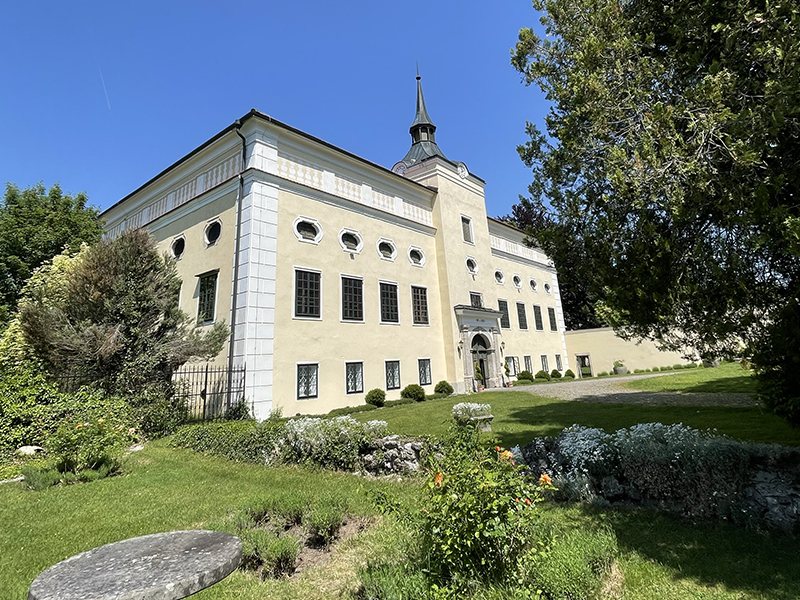
Schloss Kremsegg — the main seat
The university’s main seat is Schloss Kremsegg, a centuries-old Baroque castle in the picturesque town of Kremsmünster, in the heart of Europe. Just thirty minutes by train from Linz, Kremsmünster offers a rare combination of quiet concentration, cultural depth, and regional beauty, while remaining closely connected to the urban life and international accessibility of one of Austria’s major cities.
Set within forty-two hectares of parkland, the castle is surrounded by old trees, open grounds, and a landscape that naturally supports study, reflection, and community. Its rooms carry a sense of dignity and calm, shaped by a long history of learning and cultural life. Kremsmünster itself, with its historic abbey and long tradition of learning, offers a setting of quiet beauty and cultural depth for a university rooted in reflection and inquiry.
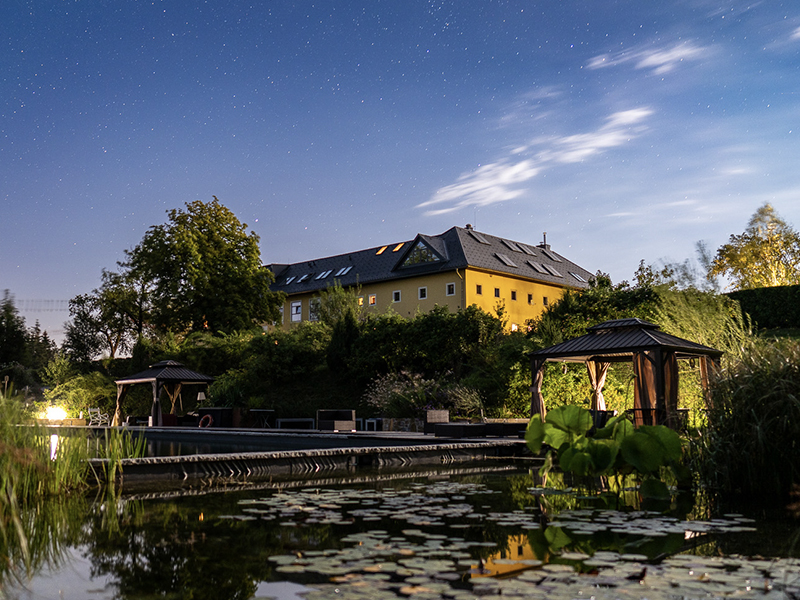
Gomde — the contemplative heart
A thirty-minute drive from Kremsegg is Gomde, the Buddhist center where the original vision for this project first arose. Housed in a fully renovated former farmhouse, with spacious meditation halls, a natural pond, and a peaceful rural setting, Gomde offers students the possibility of entering more deeply into Buddhist practice and contemplative community life.
For those who wish to live with more independence while remaining connected to the community, nearby Shanti House provides separate accommodation where rooms can be rented for longer or shorter stays.
Rangjung Yeshe Institute — Kathmandu, Nepal
For more than thirty years, the Rangjung Yeshe Institute has offered Buddhist Studies and Himalayan Languages at a high academic level. Situated in close relationship with Ka-Nying Shedrub Ling Monastery, it allows students to encounter Buddhist monastic life, Himalayan culture, and traditional learning in a direct and living context.
Dharma Gate Buddhist College — Budapest, Hungary
The university’s accrediting partner, and one of Europe’s only established Buddhist higher education institutions, located in a major European capital. Dharma Gate offers students access to an urban academic environment shaped by Buddhist thought, practice, and scholarship.
Together, these venues form a wider field of learning. Students may study primarily at Kremsegg, immerse themselves in practice at Gomde, spend time in Nepal at Rangjung Yeshe Institute, or take selected courses through Dharma Gate Buddhist College. Through visiting semesters, short courses, and intensive study periods, the university’s campus extends beyond a single place into an international network of contemplative education.